Birdwatching in Sardinia: where to observe birds among ponds, coasts and wild areas
Entertainment - 14 April 2026
Sardinia is often associated with the sea, beaches and coastal landscapes. Yet there is a less evident side of the island that reveals itself above all to those who slow down and observe: that of biodiversity.
Among ponds, lagoons, river mouths and inland areas, Sardinia is one of the most interesting points in the Mediterranean for birdwatching.
Its position along the migratory routes between Europe and Africa makes it a privileged place for the observation of numerous species, many of which can easily be spotted even without experience.
This guide was created to offer practical guidance: where to go, when to observe and how to organize an outing, in order to approach birdwatching in a simple and aware way.
Why go birdwatching in Sardinia
Sardinia offers a combination of elements that is difficult to replicate in other Italian regions. The variety of habitats is one of the main factors: within just a few kilometres, you move from coastal wetlands to brackish lagoons, all the way to more inland mountainous areas.
Added to this is a strategic geographical position, which places the island along one of the main migratory routes in the Mediterranean. During the year, and especially during migration periods, it is possible to observe a great variety of species, often concentrated in relatively accessible areas.
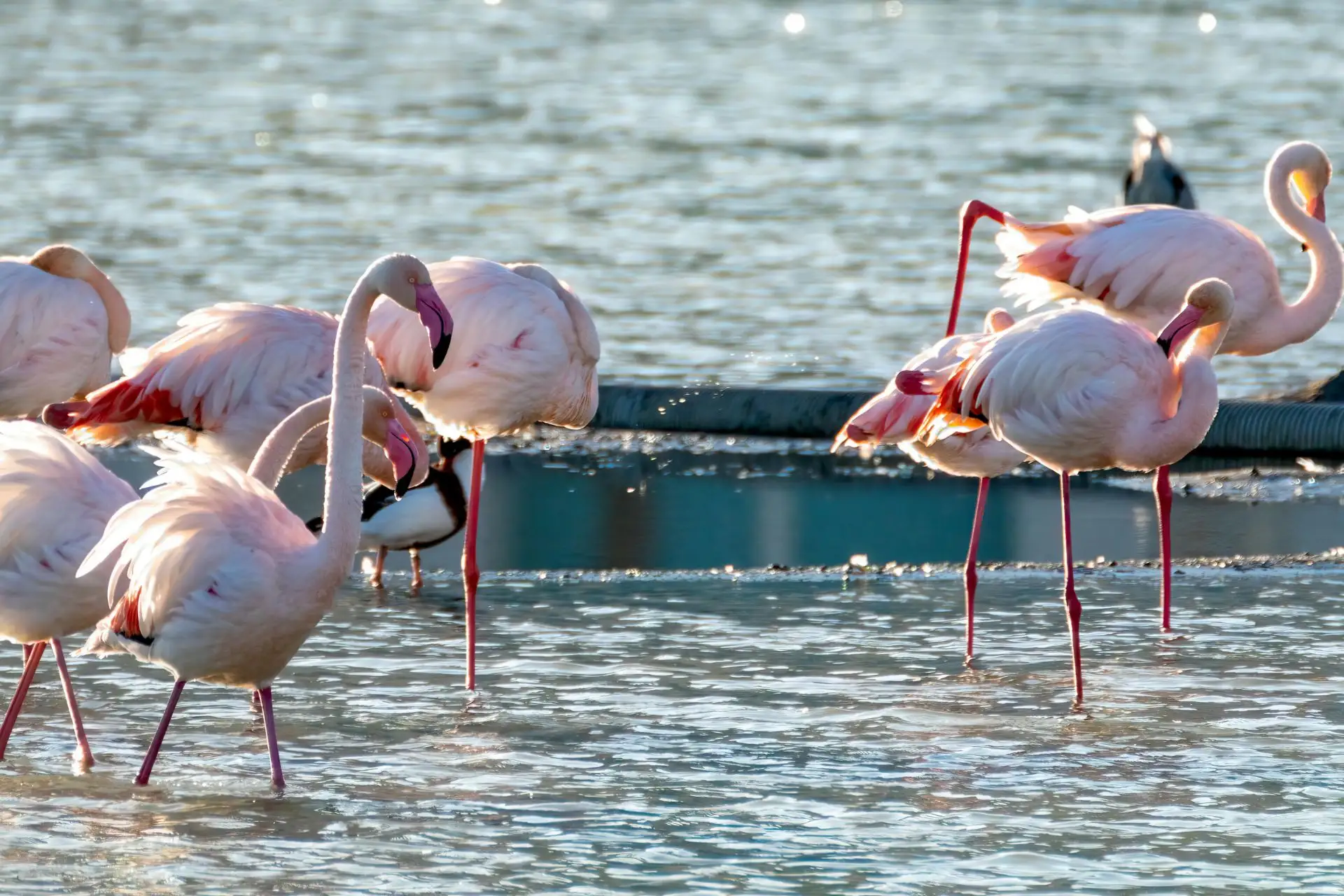
Even for those who are not experts, birdwatching in Sardinia is an immediate activity. Pink flamingos, for example, are permanently present in some areas and represent one of the most iconic sightings. Alongside them, it is possible to observe herons, cormorants, black-winged stilts and different species of birds of prey.
It is precisely this accessibility that makes the experience interesting: no advanced preparation is needed to begin, only the time to observe carefully.
The best areas for birdwatching in Sardinia
The distribution of areas of interest is wide and covers much of the island, with characteristics that are very different from one another.
In the north, between Stintino, Asinara and the Platamona Pond, there are ideal environments for observing water birds and migratory birds. The coastal wetlands and the presence of protected areas make this territory particularly interesting, even for short outings.
Also in the north, the mouth of the Coghinas represents one of the most accessible and richest points from a naturalistic point of view. Here, the meeting between fresh water and salt water creates an ecosystem favourable to many species, easily observable along the course of the river.
In the south of the island, the Molentargius-Saline Natural Park, near Cagliari, is one of the most important sites in Europe for the presence of flamingos. The area is organized and easy to visit, with flat routes that make it possible to approach the habitats without difficulty.
Alongside this, the Santa Gilla Pond offers a wider and less structured environment, where observation takes place in a more natural and less frequented context.
Finally, inland areas such as Ogliastra and the Gennargentu Park offer a different experience, linked to the observation of birds of prey and less common species. Here birdwatching is integrated with hiking, in quieter and wilder environments.
The best routes for birdwatching in Sardinia
In addition to the large natural areas, there are routes that make it possible to combine birdwatching with hiking, offering a more immersive experience, especially in the inland areas of the island.
- One of the best-known trails is the one leading to Cala Goloritzé, in Ogliastra. The route extends for about 7.2 km with an elevation gain of 518 metres and crosses a wild and little anthropized environment. During the journey, it is possible to observe different species, in particular birds of prey, thanks to the rocky formation and the presence of limestone cliffs.
- Also in this area, the route connecting Passo Genna Silana to Gola su Gorropu represents a more demanding but extremely interesting experience. With a length of about 9.5 km and an elevation gain of 880 metres, it crosses one of the most spectacular environments in Sardinia. Here birdwatching focuses above all on birds of prey and on the species that populate the mountain areas, in a natural context that is still very intact.
- A slightly more accessible alternative is the trail that leads from Pedra Longa towards Santa Maria Navarrese. This is a route of about 9.5 km with an elevation gain of 407 metres, which combines coastal stretches and panoramic views. In this area it is possible to observe both marine species and birds linked to the Mediterranean maquis, making the experience more varied.
- Alongside these more hiking-oriented routes, flat areas such as Molentargius or the Platamona Pond remain valid options, ideal for simpler and more accessible observations, especially for those approaching birdwatching for the first time.
When to go birdwatching in Sardinia
The period of the year significantly influences the variety of species that can be observed.
Spring is generally the best time, thanks to the migratory passage that brings numerous species to the island as they move between Africa and Europe. Autumn also represents an interesting period, with a second migratory phase.
During the summer, the presence of migratory species decreases, but resident species remain observable, especially in wetland areas. Winter, on the other hand, is particularly suitable for observing water birds, which find a favourable environment in Sardinian ponds.
Regardless of the season, the best times of day remain the early morning hours and late afternoon, when bird activity is more intense.
How to organize a birdwatching excursion
Birdwatching in Sardinia can be practised independently, especially in the more accessible areas such as ponds and coastal zones. However, relying on a local guide can make a difference, especially for those who want to explore further or visit less evident areas.
Guided excursions make it possible to get to know the territory better, identify strategic observation points and understand the behaviour of the different species. In addition, they offer a more structured approach, adapted to the season and environmental conditions.
What to bring for birdwatching
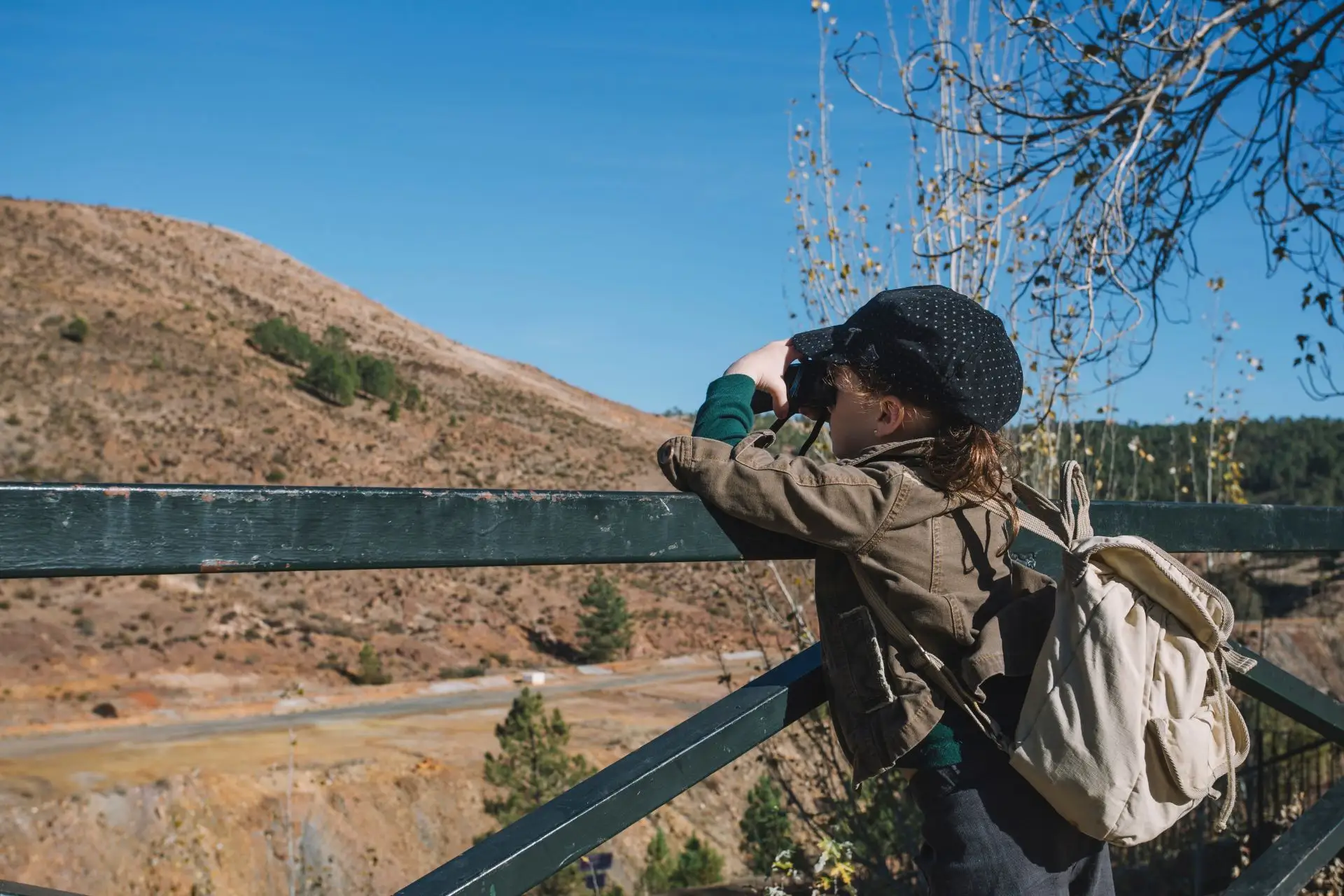
Complex equipment is not necessary to begin. Binoculars are the main tool, useful for observing species from a distance without disturbing them.
It is advisable to wear comfortable clothing in neutral colours, in order to blend in better with the environment, and to bring water and sun protection, especially in the warmer months.
For those who wish, a camera can enrich the experience, but it is not essential. The central element remains observation.
Birdwatching and stay: where to sleep
To enjoy this experience at its best, it can be useful to choose a base that makes it possible to easily reach several areas of interest.
Northern Sardinia, particularly the Stintino area, offers a good balance between accessibility and variety of environments. From here, it is possible to quickly reach wetlands, coastal stretches and more natural areas.
In this context, an independent solution such as Villa Flor makes it possible to organize the days flexibly, alternating moments of exploration with phases of relaxation. The presence of large spaces and a private pool helps create a balanced experience, in which contact with nature is integrated with comfort.
Birdwatching in Sardinia is a different way of getting to know the island. It requires time, attention and a certain willingness to slow down, but it offers a deeper experience, far from the most beaten paths.
Among ponds, coasts and inland landscapes, every observation becomes an opportunity to discover a less evident side of the territory, made of natural balances and silences.
And it is precisely in this dimension, more discreet and less immediate, that Sardinia reveals a part of its most authentic identity.