Capo Caccia, Alghero: things to see, caves, scenic views and beaches
Stintino and surroundings - 24 November 2026
Towering limestone cliffs overlooking the Mediterranean, caves hidden within the rock and small bays with crystal-clear waters: Capo Caccia is one of the most spectacular places in north-western Sardinia. Just a short distance from Alghero, this impressive headland offers breathtaking views and plenty of opportunities to discover the natural beauty of the coastline.
From the famous Neptune’s Grotto to the spectacular Escala del Cabirol staircase and the beaches of Porto Conte Bay, Capo Caccia is an ideal destination for those looking to combine outdoor adventures, time by the sea and relaxation.

Where is Capo Caccia and why visit?
Capo Caccia is located approximately 25 kilometres from Alghero, at the western end of Porto Conte Bay. The headland is characterised by limestone cliffs rising to almost 170 metres above the sea, within an area of outstanding natural interest.
The area forms part of Porto Conte Regional Natural Park and the Capo Caccia–Isola Piana Marine Protected Area, both established to protect the terrestrial and marine environments of this part of Sardinia.
The distinctive geological features of the headland have led to the formation of numerous natural caves, some of which are open to visitors.
Capo Caccia can be explored at different times of year. Summer offers the opportunity to combine sightseeing with a day at the beach, while spring and autumn generally provide more comfortable temperatures for outdoor activities.
Things to see at Capo Caccia: Neptune's Grotto and the Escala del Cabirol
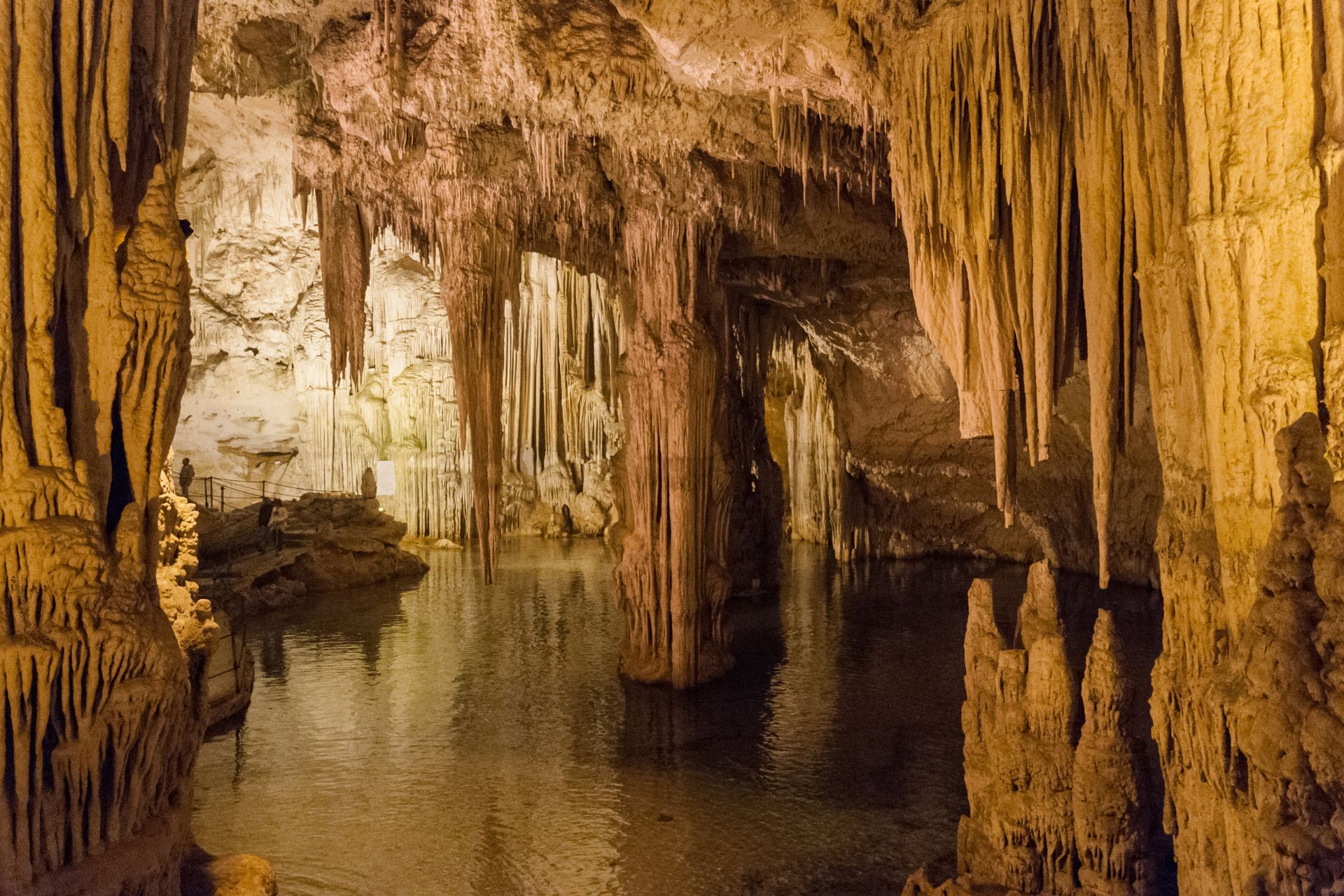
Neptune’s Grotto (Grotta di Nettuno) is Capo Caccia’s best-known attraction and one of Sardinia’s most fascinating limestone cave systems.
Formed over millions of years as water gradually eroded the limestone, the caves contain underground chambers filled with stalactites, stalagmites and remarkable mineral formations.
One of the most impressive features is Lake Lamarmora, an underground saltwater lake stretching through part of the cave system.
Guided tours follow a designated route through the main chambers, offering visitors an opportunity to learn about the geological features of this extraordinary natural site.
The cave entrance can be reached by land via the Escala del Cabirol staircase or by sea using tourist boat services, depending on the season and weather and sea conditions.
Escala del Cabirol: 654 steps above the sea
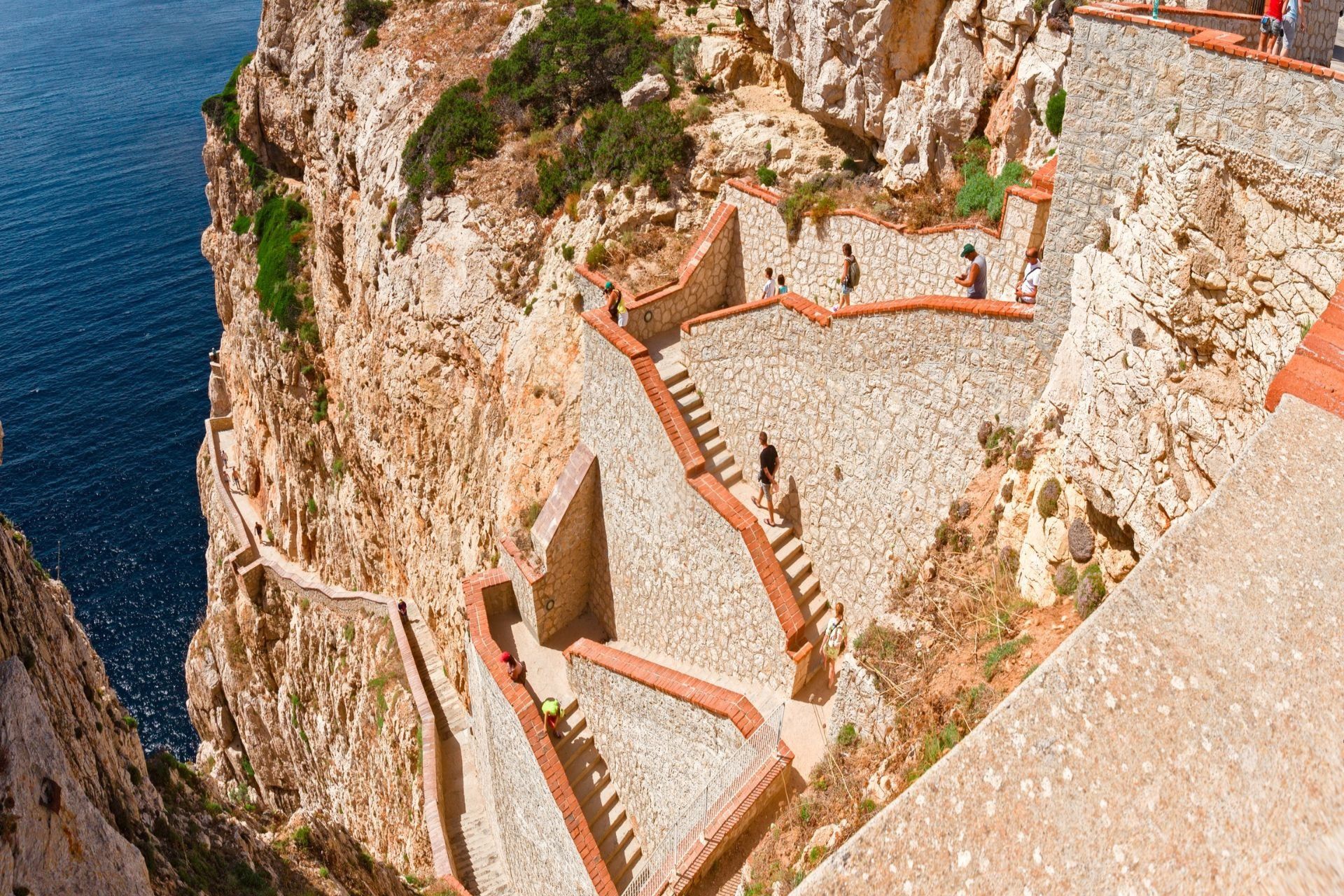
The Escala del Cabirol is a spectacular staircase built into the rocky face of the headland, connecting the top of Capo Caccia to the entrance of Neptune’s Grotto.
The route consists of 654 steps, arranged along flights and hairpin bends that follow the contours of the cliff, offering magnificent views across the Mediterranean.
The descent is particularly scenic, but visitors should also bear in mind the climb back up, which requires a reasonable level of fitness, especially on hot days.
Comfortable footwear and a supply of water are recommended. Access may be suspended in adverse weather conditions, so it is advisable to check official visitor information before setting off.
Panoramic views of Capo Caccia and its lighthouse
From the top of Capo Caccia, visitors can enjoy one of the most distinctive panoramas along the Alghero coastline. The white limestone cliffs contrast with the deep blue sea, while Mediterranean vegetation covers the higher slopes of the headland.
This is also where the Capo Caccia Lighthouse stands, an important navigational landmark along Sardinia’s western coast.
Although the lighthouse is not normally open to the public, it remains one of the area’s most recognisable features.
Accessible viewpoints along the road offer different perspectives of the dramatic cliffs.
Sunset is a particularly beautiful time to visit, as the warm light highlights the shapes of the rock formations and creates golden reflections across the water.
For safety, visitors should remain within designated viewpoints and authorised paths when enjoying the scenery.
Beaches near Capo Caccia: Mugoni and Cala Dragunara
The headland’s steep cliffs leave little room for large sandy beaches, but several easily accessible stretches of coastline can be found nearby, making them ideal places to unwind after exploring the area.
Among the most appealing are Mugoni Beach and Cala Dragunara, two destinations with very different characteristics.
Mugoni Beach: sand and sea in Porto Conte Bay
Mugoni Beach lies within Porto Conte Bay and features a long stretch of sand backed by a pine forest, which provides welcome shade during the warmer months.
Thanks to its sheltered position, the sea is often calm, offering pleasant swimming conditions when the weather allows.
Easy access and the availability of beach facilities make Mugoni particularly suitable for families and visitors looking to spend a few relaxing hours by the sea.
Cala Dragunara: a small bay at the foot of the headland
Cala Dragunara is a small cove along the road leading to Capo Caccia, surrounded by Mediterranean vegetation.
Its clear waters and seabed of sand and rock make it an appealing spot for snorkelling.
The cove’s intimate size and natural surroundings create a peaceful atmosphere, especially outside the busiest periods.
Cala Dragunara is also one of the possible departure points for boat trips to Neptune’s Grotto, when services are operating.
Porto Conte Natural Park: nature and outdoor activities
Porto Conte Regional Natural Park offers numerous opportunities to explore the area beyond its beaches and caves.
One of its most interesting areas is Le Prigionette, a natural landscape crossed by walking trails winding through woodland and Mediterranean scrub.
The area is home to several animal species, including fallow deer and white donkeys, which visitors may encounter while exploring the park in accordance with its regulations.
Depending on the activities available, the area can be explored on foot or through organised excursions.
Before visiting, it is advisable to check opening times, access arrangements and any booking requirements.
How to get to Capo Caccia from Alghero and plan your visit
Capo Caccia is approximately 25 kilometres from Alghero and can be reached by car along the road passing through Fertilia and Porto Conte Bay.
The journey generally takes 30–40 minutes, depending on traffic. Public transport connections may also be available during the tourist season, although timetables should be checked in advance.
Allowing at least half a day to explore the headland and visit Neptune’s Grotto is recommended, taking into account the time needed to reach the entrance and join a guided tour.
Visitors with more time can spend the afternoon at one of the nearby beaches or explore the nature trails of Porto Conte Natural Park.
Before setting off, it is important to check the weather forecast, cave opening times and any booking requirements, particularly during the peak tourist season.
Visiting Capo Caccia during a stay at Villa Flor
A visit to Capo Caccia can be one of the experiences to include in a stay at Villa Flor, in Stintino, adding another dimension to a holiday dedicated to exploring north-western Sardinia.
After exploring the caves, admiring the cliffs and spending a few hours enjoying the bays around the headland, you can return to Villa Flor and unwind in a private and peaceful setting, with its swimming pool, garden and sea-view terrace.
The villa also offers a range of services and experiences on request, from private chef services and massages to wine tastings and organised excursions to discover the surrounding area.
A stay that combines days spent exploring places such as Capo Caccia with moments of relaxation and comfort, allowing you to experience Sardinia at your own pace.
FAQ
Where is Capo Caccia located?
Capo Caccia is located in north-western Sardinia, approximately 25 kilometres from Alghero, in the Porto Conte area.
What are the best things to see at Capo Caccia?
The main attractions are Neptune’s Grotto, the Escala del Cabirol staircase, Capo Caccia Lighthouse and the panoramic viewpoints overlooking the cliffs.
How many steps are there on the Escala del Cabirol?
The staircase has 654 steps, which visitors must descend and climb again when accessing the caves by land.
How can you visit Neptune’s Grotto?
The caves can be explored on guided tours. Visitors can reach the entrance on foot via the staircase or by boat when services are available.
Where can you swim near Capo Caccia?
Mugoni Beach and Cala Dragunara are two of the most convenient places to swim nearby, both accessible by car.
How much time do you need to visit Capo Caccia?
Half a day is generally enough to explore the headland and visit the caves. With a full day, you can also enjoy some time at the beach or take an excursion in Porto Conte Natural Park.